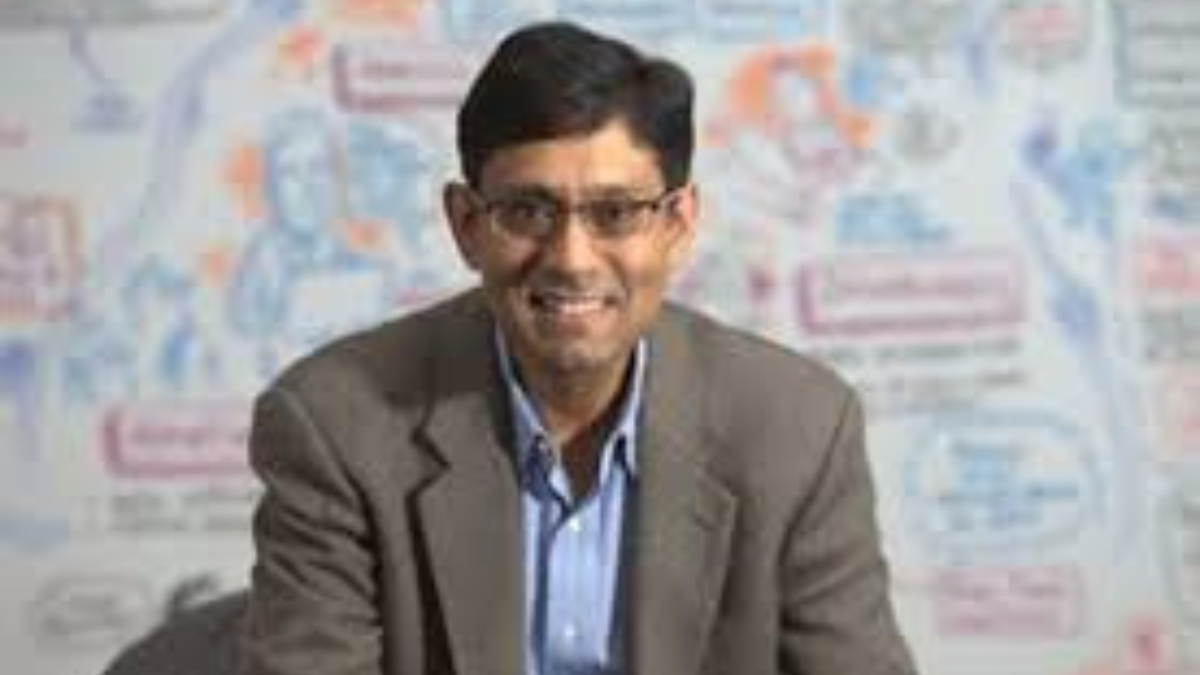
Prith Banerjee: Biography, Career, and Leadership in AI & Engineering Innovation
Prith Banerjee is a globally recognised Indian‑American technologist, research leader, and corporate visionary who has helped shape the future of artificial intelligence (AI), engineering simulation, and digital transformation. With a career spanning academia, startups, and Fortune 500 companies, Prith Banerjee has consistently been at the forefront of technological advancement and strategic leadership. Today, as the Chief Technology Officer at ANSYS, his influence extends across industries adopting advanced simulation, machine learning, and AI‑enabled solutions.
From foundational research in computing to leading innovation at global organisations, Prith Banerjee has demonstrated an exceptional ability to both invent and scale technologies that address real‑world problems. In this article, we explore his journey, contributions to AI and engineering, and lasting impact on the technology ecosystem.
Early Life and Education
Born in Khartoum, Sudan, Prith Banerjee showed a curiosity for science and problem‑solving from a young age. His early passion for mathematics and engineering set the stage for a life dedicated to research and innovation. Driven by his interest in computing systems, he moved to the United States to pursue higher education in electrical and computer engineering.
Prith Banerjee completed his Master’s and Ph.D. in Electrical and Computer Engineering from the University of Illinois at Urbana‑Champaign, one of the world’s top research universities in this field. His doctoral work focused on parallel algorithms and computer‑aided design — areas that would become foundational elements in his later contributions to engineering simulation and high‑performance computing.
While at Illinois, he published early research that blended theoretical computer science with practical engineering challenges, laying an academic foundation that would influence his work throughout his career.
Academic Career and Research Foundations
Following his doctoral studies, Prith Banerjee transitioned to academia, where he quickly became a respected educator and researcher. He served as a faculty member and later as department chair in electrical and computer engineering at various universities. His academic work drew attention for its original contributions to simulation methods, VLSI (Very Large‑Scale Integration), and parallel computing models.
In addition to scholarly research, Prith Banerjee mentored dozens of graduate students, many of whom went on to make significant contributions in research, industry, and academia themselves. His work during this period was published in numerous peer‑reviewed journals and conference proceedings, earning him early recognition among peers in computer and engineering science.
This strong academic foundation equipped Prith Banerjee with a deep understanding of complex systems — a strength he carried into his corporate leadership roles.
Corporate Leadership and Innovation at Major Technology Organisations
As his career progressed, Prith Banerjee moved into leadership positions at major technology companies, where he translated research excellence into scalable innovation.
At Hewlett‑Packard Labs, he led globally distributed research initiatives that influenced the company’s strategic direction in computing systems and emerging technologies. Later, at Accenture, he drove innovation practices for technology and services, combining deep technical insight with business strategy.
In leadership roles at Schneider Electric and ABB, Prith Banerjee helped shape global R&D, guiding organisations in digital transformation and the adoption of intelligent, connected systems. His work during these years focused heavily on integrating advanced analytics, machine learning, and simulation into industrial processes — enabling companies to improve operational efficiency and reduce time‑to‑insight.
At Synopsys, where he served as Senior Vice President of Innovation, Prith Banerjee oversaw the development of next‑generation electronic design automation (EDA) tools and simulation technologies. He fostered collaboration between engineers, technologists, and external partners, ensuring that innovation initiatives were grounded in both cutting‑edge research and customer value.
Chief Technology Officer at ANSYS: AI, Simulation, and Digital Transformation
Today, Prith Banerjee holds the role of Chief Technology Officer at ANSYS, a global leader in engineering simulation software used by companies across automotive, aerospace, healthcare, energy, and industrial sectors.
In this role, Prith Banerjee is responsible for setting ANSYS’s technology strategy and vision — emphasising AI‑driven simulation, predictive analytics, and next‑generation digital twin solutions. Under his leadership, ANSYS has accelerated the integration of artificial intelligence and machine learning into simulation workflows, enabling engineers to achieve faster design iterations, improved performance predictions, and deeper insights into complex systems.
A key focus for Prith Banerjee at ANSYS has been advancing digital twin technologies — virtual replicas of physical systems that allow real‑time monitoring, simulation, and optimisation. These innovations are transforming how companies manage assets, predict maintenance needs, and improve system performance.
Unlike traditional simulation approaches that examine design parameters in isolation, the AI‑enhanced simulation frameworks championed by Prith Banerjee combine data from sensors, predictive models, and machine intelligence — producing more accurate forecasts and meaningful business outcomes.
Impact on AI and Engineering Simulation
One of the defining aspects of Prith Banerjee’s work is his emphasis on applying AI to solve real industry problems. Rather than focusing on AI as an abstract technology, he has consistently demonstrated how AI can improve engineering decisions, reduce product development cycles, and drive digital transformation across sectors.
Under his guidance, simulation software has evolved from a primarily physics‑based discipline into a hybrid AI‑augmented platform capable of learning from data, automating complex analyses, and offering predictive insights. These advancements have enabled organisations to simulate more variables, shorten iterative testing, and optimise performance long before physical prototypes are built.
Prith Banerjee’s vision has expanded the role of simulation from a design verification tool to a strategic asset that drives innovation, improves sustainability outcomes, and supports smarter, data‑driven engineering practices.
Publications, Patents, and Thought Leadership
Throughout his career, Prith Banerjee has been an active contributor to academic and professional literature. He has authored numerous research papers on computing, simulation, and AI, and has been invited to speak at leading conferences worldwide.
His work on parallel algorithms and computer‑aided design remains influential in academic circles, while his more recent thought leadership focuses on the convergence of AI, simulation, and industrial applications.
In addition to publications, Prith Banerjee holds multiple patents related to simulation methods and computing technologies, reflecting his ongoing commitment to innovation and practical problem‑solving.
Awards and Recognition
Prith Banerjee’s achievements have been widely recognised by peers and professional organisations. His honours include fellowships from major technical societies, acknowledging his contributions to computing and engineering:
- Fellow of IEEE (Institute of Electrical and Electronics Engineers)
- Fellow of ACM (Association for Computing Machinery)
- Fellow of AAAS (American Association for the Advancement of Science)
- Fellow of the National Academy of Inventors
In addition, he has received awards for research excellence, leadership, and innovation — further validating his influence in both academic and industrial communities.
Mentorship, Community Engagement, and Legacy
Beyond corporate achievements, Prith Banerjee has been an advocate for mentorship and talent development. He has guided emerging technologists, supported research communities, and contributed to programs that help bridge the gap between education and industry.
His leadership style emphasises practical innovation — using technology not for its own sake, but to solve meaningful problems that benefit organisations, professionals, and society at large.
The legacy of Prith Banerjee lies not only in the technologies he has helped create but in the people he has inspired and the industries he has influenced. His work continues to shape how engineers and leaders approach AI, simulation, and digital transformation in the years ahead.
Conclusion
In a career marked by technical ingenuity and strategic leadership, Prith Banerjee stands out as a pioneer of AI‑enabled engineering and innovation. From foundational research to leading global technology strategies, he has consistently demonstrated how deep technical knowledge can be applied to real‑world challenges.
Today, as CTO of ANSYS, Prith Banerjee’s vision continues to drive meaningful change across industries, helping companies harness the power of simulation, AI, and digital twin technologies to create smarter, more efficient systems.
Whether through academic contributions, patented technologies, or leadership at global organisations, the story of Prith Banerjee offers valuable insights for technologists, business leaders, and anyone interested in the intersection of AI and engineering innovation.
Frequently Asked Questions
Who is Prith Banerjee and what is his current role?
Prith Banerjee is an Indian‑American technology leader serving as the Chief Technology Officer at ANSYS, driving AI and simulation innovation.
Where did Prith Banerjee study?
He earned his Master’s and Ph.D. in Electrical and Computer Engineering from the University of Illinois at Urbana‑Champaign.
What industries benefit from his work?
Engineering, automotive, aerospace, manufacturing, energy, and healthcare benefit from advances in simulation and AI.
What are digital twins?
Digital twins are AI‑enabled virtual representations of physical systems used for monitoring, prediction, and optimisation.
Has Prith Banerjee published research or patents?
Yes — he has authored influential research papers and holds several patents in simulation and computing methods.
Also Read: chef sandoval