Car Invisible Technology: How Mercedes-Benz Created the World’s First Transparent Car
The concept of a car invisible to the naked eye has fascinated motorists, engineers, and science fiction fans for decades. What once felt like pure fantasy is now part of real automotive experimentation. In recent years, the idea of car invisible innovation has captured public imagination, particularly in the UK, where interest in future mobility and green technology continues to grow.
Rather than relying on magic or fictional cloaking devices, modern developers have approached the concept with practical engineering solutions. The term car invisible today refers to technology that creates the illusion of transparency using cameras and digital displays. This breakthrough demonstrates how creative thinking and advanced electronics can reshape the way we view vehicles and road safety in the modern era.
The Origins of Car Invisible Innovation
Long before real-world prototypes existed, the dream of invisible vehicles appeared in novels, films, and comic books. These cultural references sparked curiosity about whether such technology could ever become possible. Engineers began exploring how light interacts with surfaces, and how digital imaging could be used to replicate what the human eye expects to see.
As display technology improved, the possibility of making a car invisible through projection became more realistic. The rise of LED panels, high-definition cameras, and real-time video processing opened the door to experimentation. Automotive manufacturers started investigating how these tools could enhance safety while also delivering a dramatic visual statement that would attract global attention.
Mercedes-Benz and the Transparent Car Breakthrough
A major milestone in car invisible development came from Mercedes-Benz, a brand long associated with engineering excellence and forward-thinking design. The company introduced a concept vehicle that appeared transparent from specific angles, using advanced projection systems to create a convincing illusion. This was not merely a publicity stunt but a demonstration of how sustainable technology and digital innovation could work together.
The project was linked to the brand’s hydrogen-powered F-Cell vehicle, reinforcing its commitment to environmentally responsible transport. Cameras mounted on one side of the car transmitted live footage to flexible LED panels on the opposite side. As a result, observers could see what appeared to be the background passing directly through the car’s body, creating the powerful impression of a car invisible to the eye.
How Car Invisible Technology Works in Practice
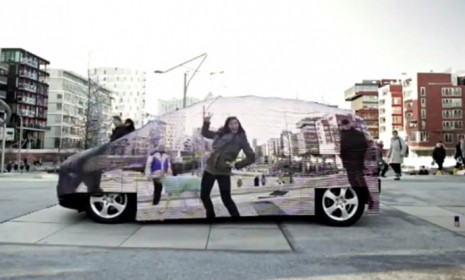
The science behind car invisible systems is surprisingly straightforward, though technically sophisticated. High-resolution cameras capture continuous footage of the environment around the vehicle. That footage is instantly transmitted to ultra-thin LED screens embedded within the car’s body panels. The screens then display the live images in precise alignment with the viewer’s perspective.
This process does not involve bending light or altering physical matter. Instead, it relies on carefully synchronised digital projection to trick the brain into perceiving transparency. While the effect works best from certain viewing positions, it demonstrates the remarkable potential of combining optics and electronics. In practical terms, the same principles can be adapted to improve visibility for drivers navigating challenging terrain.
The Safety Benefits of Car Invisible Systems
One of the strongest arguments in favour of car invisible innovation is its potential contribution to road safety. By reducing blind spots and offering drivers a clearer view of obstacles, this technology can significantly improve situational awareness. In busy urban environments across the UK, enhanced visibility could help prevent minor collisions and improve pedestrian safety.
For off-road driving, transparent projection systems could allow motorists to see terrain hidden beneath the bonnet. This capability would make navigating uneven ground safer and more precise. Although current applications remain experimental, the safety advantages are clear. As camera and display technology continues to advance, these systems may become a practical feature rather than a futuristic spectacle.
Scientific Possibilities and Technical Limitations
Despite impressive demonstrations, creating a truly car invisible vehicle remains scientifically complex. True invisibility would require advanced metamaterials capable of bending light entirely around an object. While research in this field is ongoing, large-scale automotive use is still far from reality due to cost and material constraints.
However, illusion-based transparency offers a realistic stepping stone. By leveraging digital projection, manufacturers can achieve many of the visual benefits without the need for exotic materials. The key limitation lies in viewing angles and environmental conditions. Bright sunlight, extreme weather, or rapid movement can reduce the effectiveness of the illusion, highlighting the challenges still facing widespread adoption.
Car Invisible Compared with Other Future Automotive Technologies
The automotive industry is currently undergoing rapid transformation, with electric vehicles, autonomous driving systems, and smart connectivity dominating headlines. Within this landscape, car invisible technology occupies a unique position. Rather than replacing drivers or changing how cars are powered, it focuses on improving perception and visibility.
Compared with flying car concepts or fully self-driving vehicles, transparent projection systems appear more achievable in the near term. Many modern cars already rely heavily on cameras and sensors. Integrating advanced projection into existing safety systems could be a natural evolution rather than a radical overhaul. This practical compatibility strengthens the long-term potential of car invisible innovation.
Public Reaction and Regulatory Considerations in the UK
When the transparent car concept was first unveiled, public reaction in the UK ranged from amazement to scepticism. Many praised the creativity and environmental messaging behind the demonstration. Others questioned whether such visual effects might distract drivers or create confusion on busy roads.
Regulatory bodies would need to assess how projection systems interact with safety standards and lighting regulations. Any mainstream adoption of car invisible technology would require careful testing to ensure it does not compromise road visibility for other motorists. Nevertheless, the concept has stimulated valuable discussions about how far innovation can go while maintaining public safety.
The Future of Car Invisible Technology
Looking ahead, it is unlikely that fully transparent cars will appear in British showrooms in the immediate future. However, elements of the technology are already influencing vehicle design. Surround-view camera systems, augmented reality dashboards, and digital exterior displays are becoming increasingly common in premium models.
As manufacturing costs decrease and display technology becomes more durable, the foundations of car invisible systems may gradually enter mainstream production. What began as a bold demonstration could evolve into everyday safety features that drivers barely notice. In this sense, the journey towards practical transparency has already begun.
Conclusion
Car invisible technology represents a compelling fusion of imagination and engineering expertise. While complete invisibility remains beyond current scientific reach, projection-based transparency has proven that creative thinking can redefine automotive possibilities. The pioneering work by Mercedes-Benz demonstrated how sustainability and innovation can combine to capture global attention.
In the coming years, the influence of car invisible development is likely to expand quietly through enhanced visibility systems and augmented displays. Rather than making vehicles disappear entirely, the real achievement lies in helping drivers see more clearly. As the UK automotive sector continues to evolve, transparent technology may well become a subtle yet powerful part of everyday motoring.
Frequently asked questions
What is car invisible technology?
Car invisible technology uses cameras and LED displays to project live surroundings onto a vehicle, creating the illusion of transparency.
Did Mercedes-Benz really create a car invisible model?
Yes, Mercedes-Benz demonstrated a concept vehicle that appeared invisible using camera and projection technology.
Is car invisible technology available to buy in the UK?
No, fully transparent cars are not commercially available, but related visibility features exist in modern vehicles.
How does a car invisible system improve road safety?
It reduces blind spots and enhances driver awareness by showing hidden areas around the vehicle.
Is a completely invisible car scientifically possible?
True physical invisibility is currently not practical, but digital projection can create a convincing illusion.
Will car invisible technology become common in the future?
Elements of the technology may become mainstream as camera and display systems continue to advance.
Also Read: smart locks for home